Improve your balance and performance with targeted single-leg training exercises.
Single-leg exercises like hip lunges, deadlifts and glute bridges form the backbone of a solid strength program because they force your body to confront real-world imbalances head-on. When you strip away the support of two feet planted firmly on the ground, every muscle from your ankles to your core has to step up and hold the line. Start by standing tall with your weight shifted onto one foot, keeping that ankle slightly turned out and your thigh softly bent. From there, press your heel into the floor and lunge backward while keeping your torso squared toward the front. As you reach the bottom of the lunge, straighten your back leg and drive the ball of that foot hard into the surface.
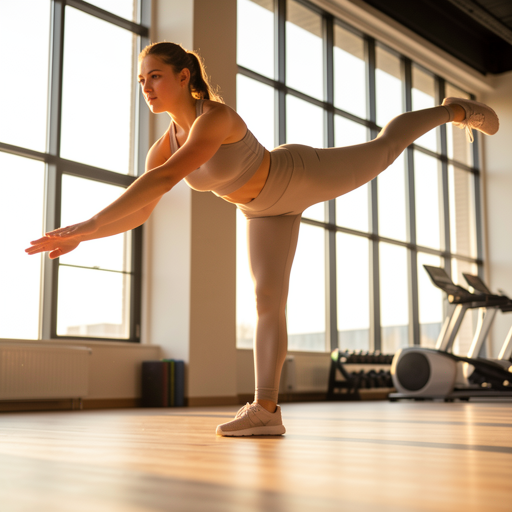
Do not let the foot roll backward — maintain that pressure and slowly return to the starting position. This single motion taxes your balance, fires up your glutes and hamstrings and builds the kind of functional strength that carries over into almost every other movement you do. The single-leg deadlift takes things a step further by challenging stability while building posterior chain strength from the ground up. Stand with one foot positioned a few inches ahead of the other, ankle slightly flared and your thighs soft in a slight bend. Without shifting your foot, hinge at the hip and lower your torso toward the floor until your front thigh sits parallel to the ground.
🌈
Your back leg will naturally lift off the floor as you step forward about a foot and a half. As you step, keep your shoulders square, raise the opposite arm overhead and hold the position long enough to feel your balance muscles firing. Then return to the top with control. You will quickly discover that this movement demands focus and patience, but the payoff — stronger legs, better stability and improved posture — makes every second worthwhile. What makes these single-leg movements especially powerful is the way they connect to athletic performance and everyday movement patterns.
💪
Think about how often we rely on one leg at a time: climbing stairs, catching ourselves from a stumble or accelerating forward during a sprint. The same principle applies to jumping rope, where each bounce demands quick balance, ankle resilience and core engagement. When you train one leg at a time on the ground, you are building the foundational strength that makes skipping feel effortless and sustainable over long sessions. The muscles that stabilize your knee and hip during a single-leg glute bridge are the very same muscles that protect you when you land from a double-under or a high box jump. Building this type of strength takes consistency, not intensity and the rewards stack up over weeks and months rather than days.
🖖
Start with just a few controlled repetitions on each side, focusing on quality of movement before chasing numbers. Keep your shoulders facing forward, your core braced and your breathing steady. As your balance improves and your muscles adapt, you can add time under tension, slow down the eccentric phase or incorporate light weight. Whether you are preparing to jump rope for an hour straight or simply want to move through your day with more confidence and less injury risk, single-leg training gives you the tools to get there. Stick with the process, respect the difficulty and let your body teach you what it is capable of.